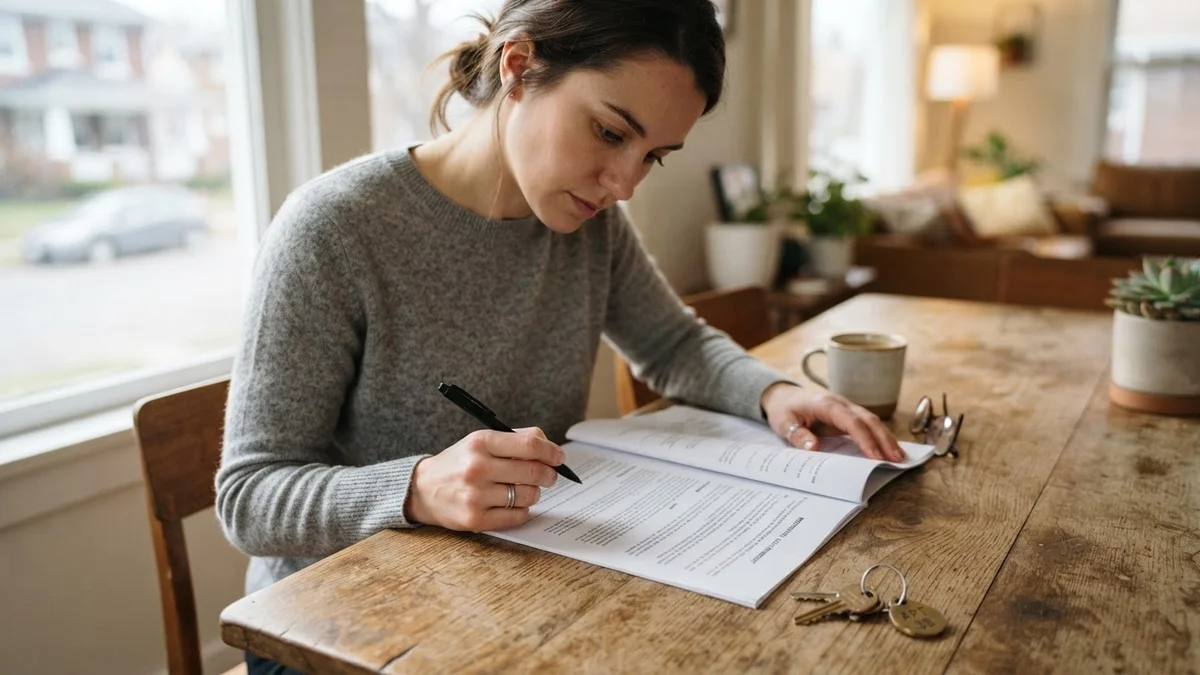
A rental agreement, or lease, sets out the rules for renting a home. Reading it carefully before signing helps prevent misunderstandings and disputes later. Laws vary by country and city, but the core terms are similar worldwide.
Key Terms to Check
| Term | What to look for |
|---|---|
| Rent and due date | Amount, payment method and late fees |
| Security deposit | Amount and conditions for return |
| Lease length | Start date, end date and renewal terms |
| Rent increases | When and how rent can change |
| Maintenance | Who handles repairs and how to report them |
| Notice period | How much notice each side must give |
| Rules | Pets, guests, subletting and alterations |
Before You Sign
- Visit the property and check everything works.
- Confirm the landlord’s identity and ownership.
- Ask for all promises in writing.
- Never pay money before seeing the property and a written agreement.
Document the Condition
Take dated photos and videos of every room when you move in, and note existing damage in a checklist signed by both sides. This helps protect your deposit.
During the Tenancy
Pay rent on time, report repairs promptly in writing and keep copies of all receipts and messages.
Moving Out
Give proper notice, clean thoroughly, repair any damage you caused and take final photos. Ask for an itemised explanation of any deposit deductions.
Know Your Local Rights
Tenant rights differ widely between regions. Check local housing authority websites or tenant associations for guidance.
Conclusion
A clear rental agreement and good records protect you throughout your tenancy. Read carefully, ask questions and keep everything in writing.
Disclaimer: This article is for general information only and does not constitute legal, financial or professional advice. Property laws, costs and practices vary by country. Please consult qualified professionals before making decisions.