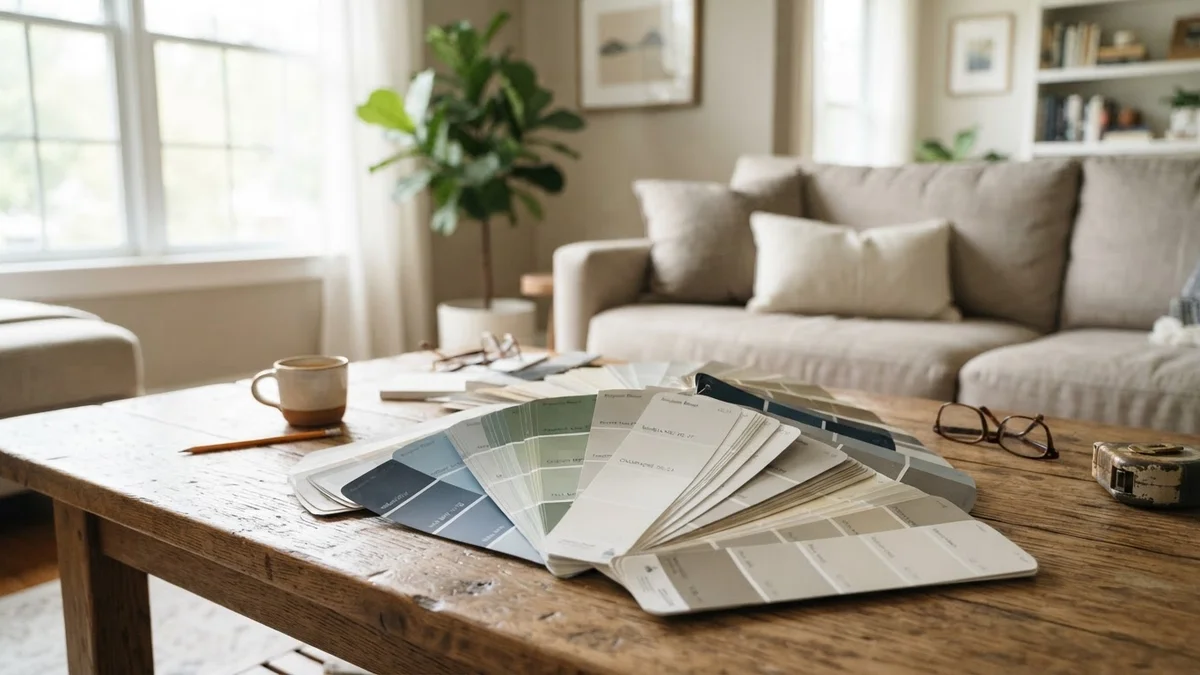
Choosing colours for your home can feel overwhelming with thousands of paint shades available. A clear plan helps you create rooms that feel harmonious and reflect your style.
Start With Inspiration
Look at items you already love, such as a rug, artwork or fabric. Pull two or three colours from them as a starting point for your palette.
Use the 60-30-10 Rule
| Share | Role | Example |
|---|---|---|
| 60% | Main colour | Walls and large surfaces |
| 30% | Secondary colour | Furniture, curtains, rugs |
| 10% | Accent colour | Cushions, art, small decor |
Understand Colour Moods
- Blues and greens: calming, good for bedrooms and bathrooms.
- Warm whites and beiges: versatile and welcoming.
- Yellows and oranges: cheerful and energetic.
- Greys: modern and neutral, warm or cool depending on undertone.
- Dark shades: cosy and dramatic, best with good lighting.
Consider Light
Colours look different in morning, evening and artificial light. Test paint samples on several walls and check them throughout the day before committing.
Create Flow Between Rooms
Use a common neutral or repeat accent colours from room to room so your home feels connected rather than disjointed.
Do Not Forget Finishes
Matte finishes hide imperfections, while satin or semi-gloss finishes are easier to clean in kitchens, bathrooms and children’s rooms.
Conclusion
A good colour palette starts with inspiration, follows a simple balance and is tested in real light. Take your time and your home will feel cohesive and personal.
Disclaimer: This article is for general information only and does not constitute legal, financial or professional advice. Property laws, costs and practices vary by country. Please consult qualified professionals before making decisions.